
Blackjack is one of the most popular casino card games, and learning the right strategy can make a big difference in how well you play. One move that often confuses beginners is the split option.
At first glance, splitting seems simple. When you receive two cards with the same value, you can separate them into two hands and play them individually. But deciding when to split and when not to split is an important part of smart blackjack strategy.
If used correctly, splitting can improve your chances of winning. If used incorrectly, it can quickly increase your losses. Understanding the basic rules and situations where splitting makes sense is key to playing blackjack effectively.
What Does “Split” Mean in Blackjack?
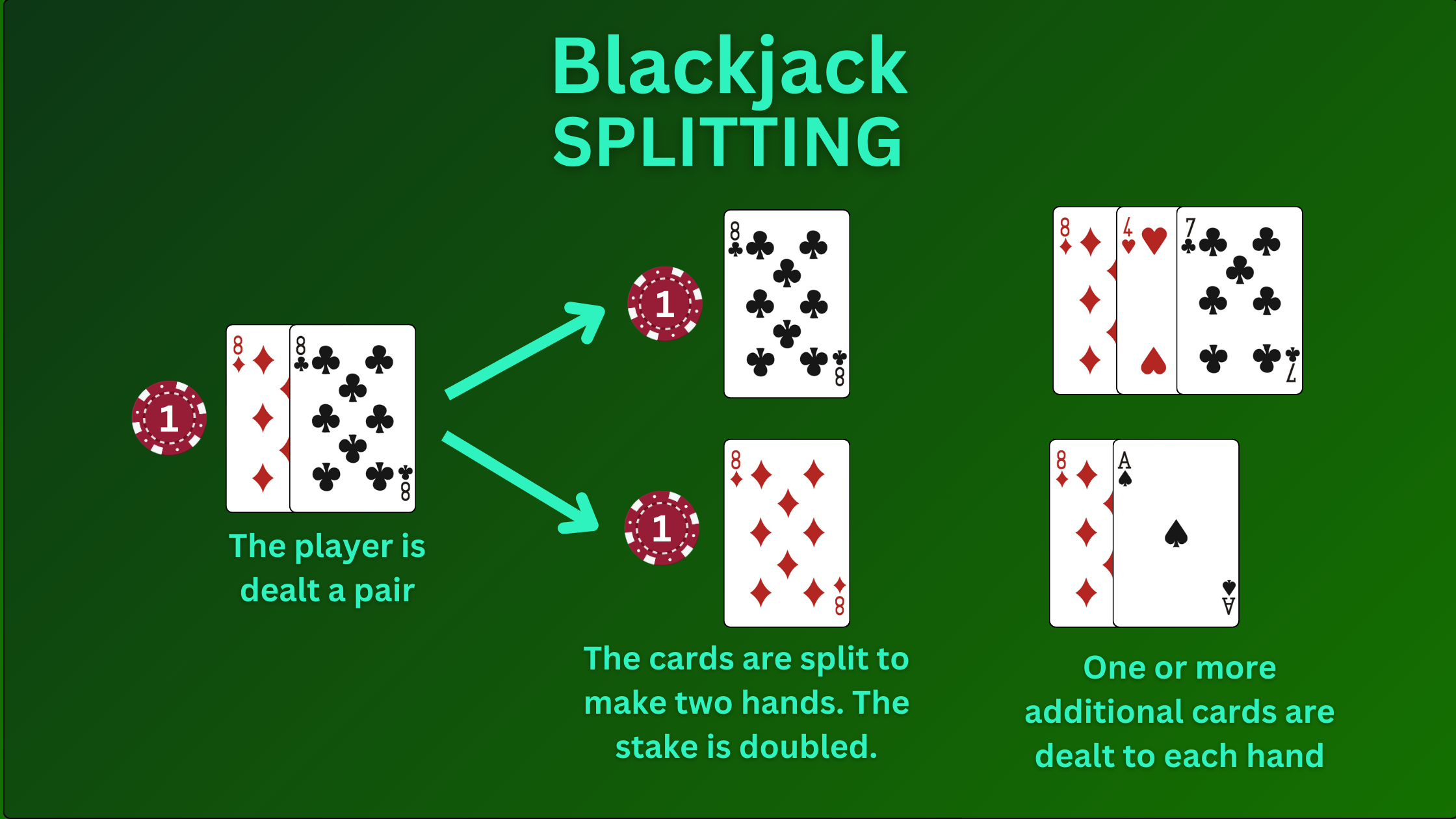
A split occurs when your first two cards have the same value. Instead of playing them as one hand, you can divide them into two separate hands.
To do this, you must place another bet equal to your original wager. The dealer then gives each card a new card, creating two different hands that you will play independently.
For example, if you receive two eights, you can split them into two hands. Each eight will receive another card, giving you two chances to build a stronger total.
What Counts as a Pair?
Most blackjack tables allow players to split any two cards with the same rank.
This includes pairs such as:
- 2–2
- 5–5
- 9–9
- Queen–Queen
- Ace–Ace
Some tables also allow splitting any cards that have the same value, such as a King and a Ten. However, other tables only allow splitting if the cards are exactly the same rank.
Because rules can vary slightly between tables or online games, it’s always helpful to check the game rules before playing.
Basic Rules for Splitting in Blackjack
Splitting may look simple, but there are a few rules players should know before using this option.
You Can Only Split the First Two Cards
Splitting is only allowed on the first two cards dealt to you. Once you choose to hit, stand, or double down, the split option is no longer available.
You Must Place a Second Bet
To split a pair, you must place another bet equal to your original wager. This means you are risking twice the amount because you are now playing two hands.
You Can Sometimes Split Again
If you split and receive another card with the same value, some tables allow you to split again. This is known as resplitting.
However, most tables limit the number of hands you can create, usually to three or four.
Split Aces Often Have Special Rules
Aces are treated differently at many tables. After splitting Aces, players usually receive only one additional card for each Ace and must stand afterward.
Because of this rule, players cannot normally hit or draw additional cards after splitting Aces.
A 21 After a Split Is Not Always Blackjack
If you split Aces and receive a ten-value card, the total becomes 21. However, this usually counts as a normal 21 rather than a natural blackjack. This means it pays the regular amount instead of the higher blackjack payout.
Always Split Aces
One of the most common rules in blackjack strategy is always split Aces.
When played as a single hand, two Aces count as either 2 or 12, which is not very strong. By splitting them, you create two hands that each start with an Ace.
Since an Ace is the most valuable card in blackjack, this gives you a better chance of building strong hands.
Even with restrictions on split Aces, this move is almost always considered the best choice.
Always Split Eights
Another important rule is to always split a pair of eights.
Two eights create a total of 16, which is one of the weakest hands in blackjack. Playing 16 against most dealer cards is difficult and often leads to losing the hand.
By splitting the eights, you turn one weak hand into two new hands that have a better chance of improving.
This strategy is commonly recommended regardless of the dealer’s card.
When Splitting Nines Can Be a Good Idea
A pair of nines gives you a total of 18, which might seem strong at first. However, in some situations splitting them can create better opportunities.
For example, when the dealer shows weaker cards, splitting nines can give you two hands that may beat the dealer more easily.
In general, many strategy guides suggest splitting nines against dealer cards ranging from two through six, and sometimes against eight or nine.
However, when the dealer shows a seven, ten, or Ace, standing on eighteen is usually the safer option.
Splitting Sevens
A pair of sevens totals fourteen. In certain situations, splitting them can provide a better chance of building stronger hands.
Players often split sevens when the dealer shows lower cards, such as two through seven.
Against higher dealer cards, it may be better to simply hit the hand instead.
Small Pairs and Table Rules
Pairs like twos, threes, fours, and sixes can sometimes be split, but these decisions often depend on the specific table rules.
Some tables allow players to double down after splitting, which can make splitting these smaller pairs more valuable.
If doubling after splitting is not allowed, the advantage of splitting these pairs may be reduced.
Because of this, experienced players usually check the table rules before deciding how to play these hands.
Hands You Should Never Split
Just because you receive a pair does not mean you should automatically split.
There are two pairs that players almost never split.
Never Split Fives
Two fives equal a total of ten, which is one of the strongest starting hands in blackjack.
Instead of splitting them into weaker hands, it is usually better to keep the total of ten and either hit or double down depending on the dealer’s card.
Never Split Tens
Two ten-value cards give you a total of twenty. This is already an excellent hand that will win most of the time.
Splitting tens breaks a strong hand into two weaker ones, which usually lowers your chances of winning.
For most players, keeping the total of twenty is the best decision.
Common Mistakes When Splitting
Many blackjack players make mistakes when it comes to splitting pairs. These mistakes often happen because players rely on guesswork instead of strategy.
Some of the most common errors include:
- Splitting pairs without understanding the strategy
- Ignoring table rules that affect decisions
- Forgetting that splitting requires an additional bet
- Playing the new hands incorrectly after splitting
Remember that splitting is only the first step. After the cards are divided, each hand must still be played carefully.
How Table Rules Can Affect Strategy
Different blackjack tables may have slightly different rules, and these can affect the correct strategy for splitting.
Some rules that can influence decisions include:
- Whether the dealer hits or stands on certain totals
- Whether players can double down after splitting
- The number of times a player can resplit
- Restrictions on splitting Aces
Even small rule changes can shift the best strategy in certain situations. That is why experienced players often review the table rules before starting a game.
Final Thoughts
Splitting is one of the most important strategic decisions in blackjack. While the move itself is simple, knowing when to split and when not to split is what separates beginner players from experienced ones.
The easiest way to remember the basics is:
Always split Aces and eights
Never split fives or tens
Use the dealer’s card and table rules to guide other decisions
By following these simple guidelines and practicing basic strategy, players can improve their chances of making smarter decisions at the blackjack table.